

Home › Articles & guides › Pass Vs Fail: Real Examples of What Test and Tag Uncovers on Perth Work Sites
Compliance
⏱ 5 min read
📅 Updated Jun 2026
Electricity Regulations WHS Act 2022
Home › Articles & guides › Pass Vs Fail: Real Examples of What Test and Tag Uncovers on Perth Work Sites

COMPLIANCE GUIDE
Inspection stages every appliance goes through visual, then electrical
Real fault types PTTS technicians regularly find on Perth sites
Compliance reporting turnaround once your test and tag visit is complete
Local WA Technicians Industry Leading Digital Reports Trusted by over 600 WA Businesses Licensed & Insured Competitive Local Rates
A visual inspection is the first line of defence in any test and tag service. It checks that the external safety features of an appliance still meet Australian standards and manufacturer specifications, before any electrical testing even begins. The most common issues our technicians find during a visual inspection include:
Cuts, abrasions, or burns in leads that expose single insulation or copper wiring
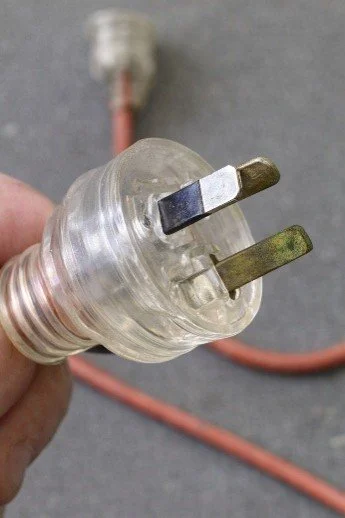
Plugs missing required insulation on the active and neutral pins, most often found on appliances manufactured and imported from countries without the same safety requirements as Australia
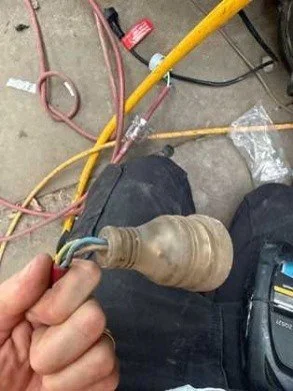
Extension leads that have been stretched, leaving the single insulation showing outside the plug top or socket housing
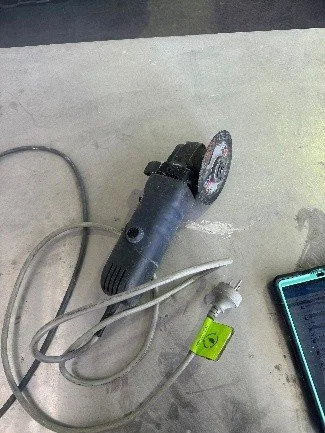
Missing safety guards on appliances such as grinders and saws, where the equipment is no longer operating to manufacturer specifications
Loose rubber grommets on tools that no longer prevent access to internal components
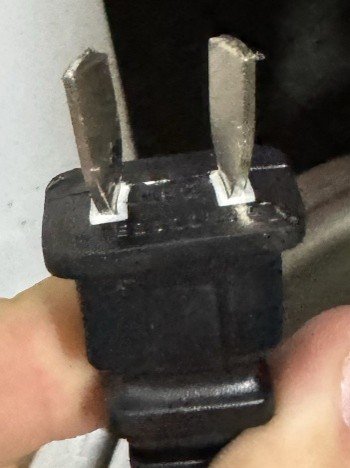
Modified plugs, such as a 15A plug shaved down to fit a 10A socket, which allows the appliance to potentially draw more current than the socket is rated for and creates a risk of electrical fault or fire.
In this article:
What a visual inspection commonly finds
What electrical testing reveals
Real examples from Perth sites
Example images
The PTTS fail process
The cost of an undetected fault
Book your test and tag with PTTS
Book your Test and Tag with PTTS
Testing and Tagging by certified
technicians. Compliance certificate
issued within 48 hours.
or call 08 6109 8591
Written By:
PTTS Technical Team, Certified technicians, Perth WA
A lead or appliance can look perfectly fine on the outside and still fail an electrical test. This is where formal testing earns its place in any compliance program, picking up faults that simply aren't visible during a walk-around check.
Damaged earth continuity — detects a broken or high-resistance earth conductor that may not be visible but could prevent protective devices from operating during a fault
Insulation breakdown — identifies deteriorated or damaged insulation that can lead to electric shock or short circuits, even when the cable looks intact
Polarity faults — confirms that active, neutral, and earth conductors are correctly connected where applicable
Leakage current — measures unintended current flowing to earth, indicating insulation deterioration or internal faults
Incorrect wiring or internal faults — detects faults inside plugs, sockets, or equipment that cannot be seen from the outside
Hidden damage — finds electrical defects caused by crushing, moisture ingress, overheating, or ageing before they become visible
ASSET PROTECTION
Not sure if your equipment is compliant?
Don’t wait for an audit to find out. Book a site assessment and our technicians will identify risks before they become failures.
Missing pin insulation on an imported appliance. An appliance plug was missing insulation on the active and neutral pins, meaning it did not meet AS/NZS 3760 standards. This is most commonly found on appliances manufactured and imported from countries that don't share the same safety requirements as Australia.
Exposed insulation on a stretched extension lead. Single insulation was showing outside the plug top and socket housing. This typically happens when extension leads are stretched and, over time, fluctuating environmental temperatures cause the secondary insulation to expand and shrink.
Missing safety guard on a grinder. An appliance's case and structure had been modified, with the required safety guard around the grinding disk missing entirely.
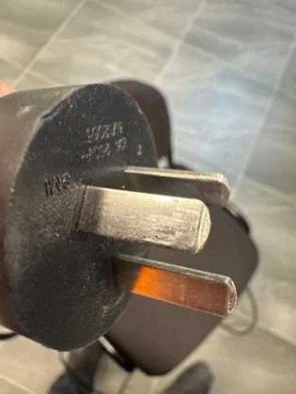
Modified plug pins. Plug top pins had been altered to fit into standard Australian GPOs, rather than using the correct plug for the socket type.
Shaved earth pin. A 15A earth pin had been shaved down, commonly found on extension leads and appliances used in workshops, allowing equipment to draw more current than the socket was rated for.
No client names, but these are genuine examples our technicians have come across during test and tag visits across Perth work sites.
Photos from real PTTS inspections help bring these faults to life for site managers and staff. Add technician-captured images for each fault type below (no client or site identifiers).
When one of our technicians identifies a failed appliance, we follow a clear, consistent process to keep your site safe and your records accurate:
The failure is documented using a Service M8 form
The client is informed of the failed appliance, so we can determine whether it's critical equipment
If it is critical, we discuss possible solutions with the client, such as arranging our partnered electrician to rectify the fault, or checking whether the client has their own electrician to organise repair
If the fault can be repaired with a plug top replacement, we get confirmation from the client before carrying out the repair
If the appliance cannot be repaired by a technician, an orange "Out of Service" tag is applied, with a written description of the fault
A test and tag visit might cost a few hundred dollars. An undetected electrical fault could cost thousands in equipment damage, lost productivity, higher insurance premiums, or, most importantly, put someone's health at risk.
Test and tag is inexpensive preventative maintenance that helps identify hidden electrical faults before they become dangerous. It shouldn't be viewed as just a compliance box to tick; it's a risk management measure. The cost of routine inspection and testing is insignificant compared with the financial, legal, and human consequences of an electrical incident.